An app for teenagers and adults who want to spend less time on their phone. Research-backed methods help break the addictive cycles of social media use.
Welcome to The Reclaim Game! Where you and your hamster companion can build healthier habits together — one day at at time.
Welcome to The Reclaim Game! Where you and your hamster companion can build healthier habits together — one day at at time.
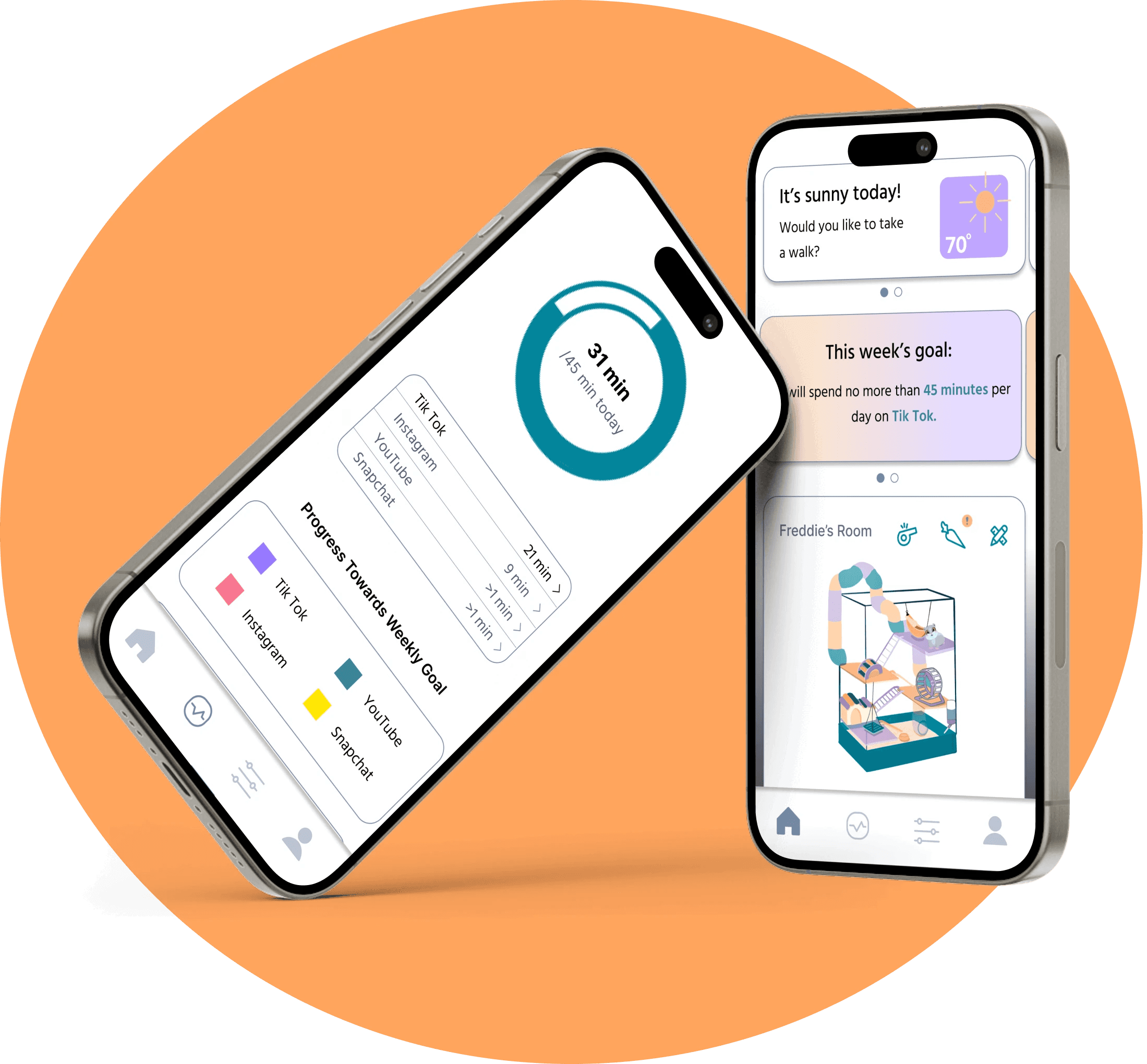
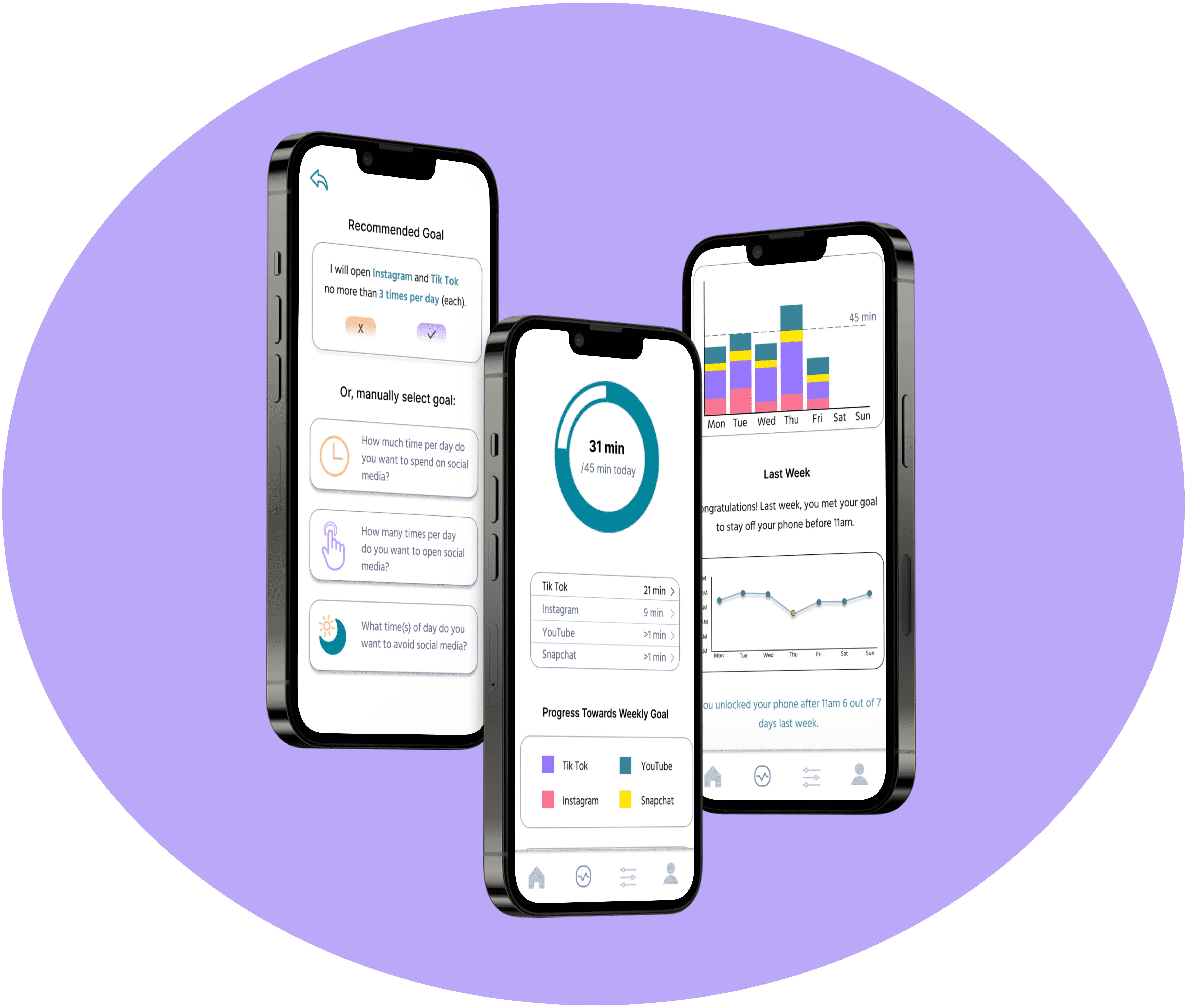
Track your screen time, set weekly goals, and see your progress.
Track your screen time, set weekly goals, and see your progress.
When you succeed, so does your hamster companion! Earn snacks, furniture and toys for your hamster as you work towards your screen time goals. And when you spend time off your phone, your hamster gets a chance for rest and play.
When you succeed, so does your hamster companion! Earn snacks, furniture and toys for your hamster as you work towards your screen time goals. And when you spend time off your phone, your hamster gets a chance for rest and play.
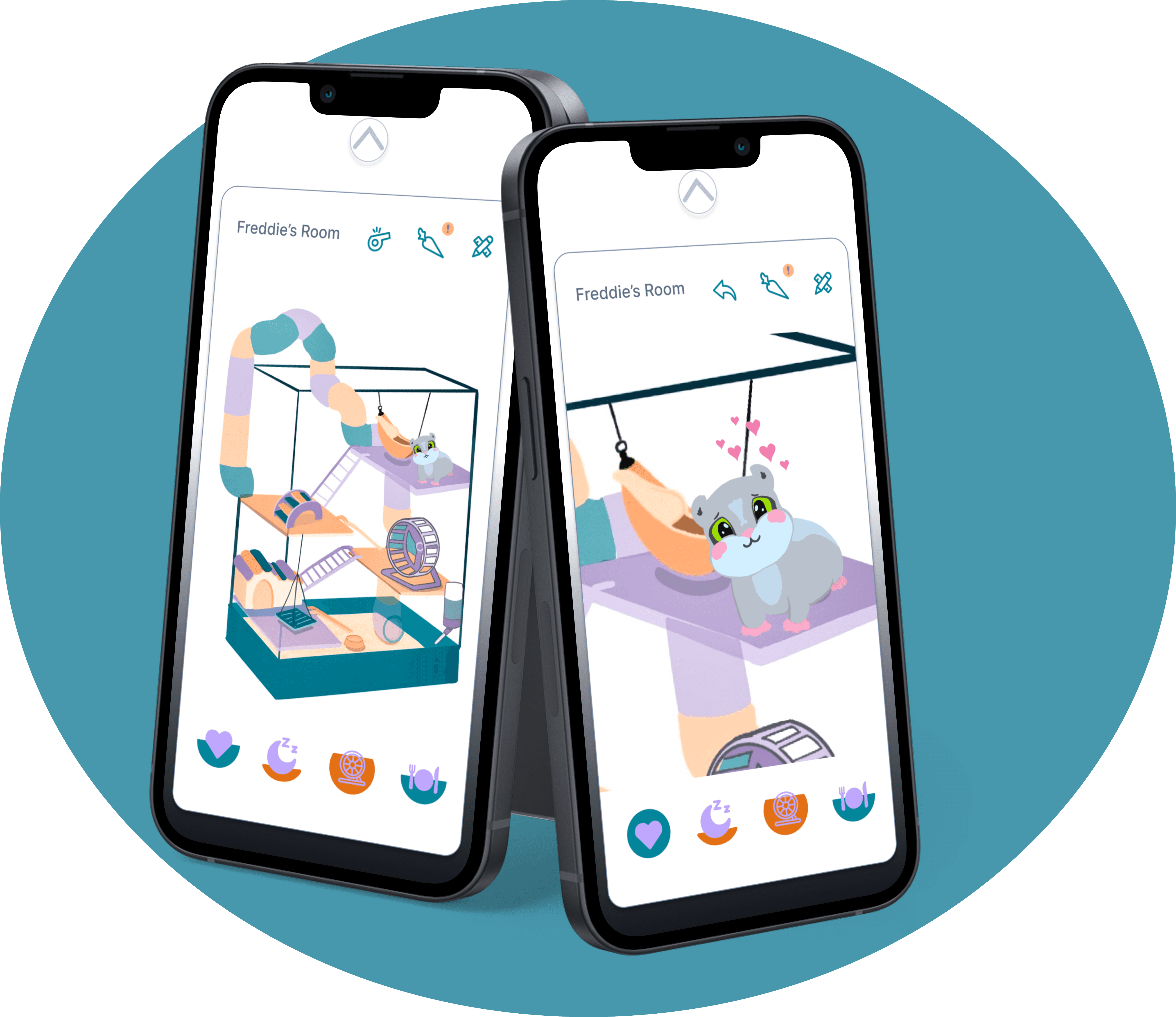
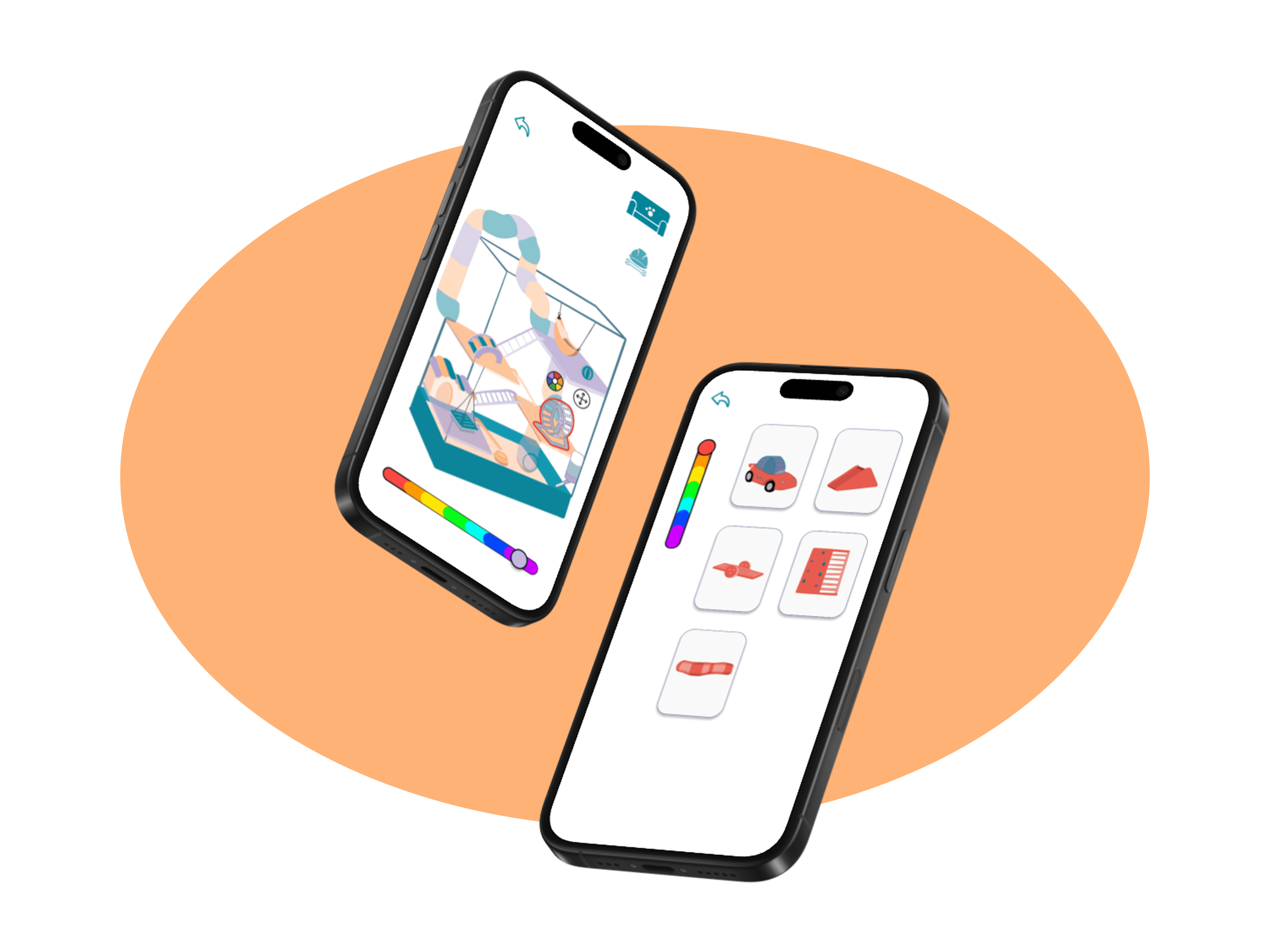
And, your hamster's habitat is fully customizable!
And, your hamster's habitat is fully customizable!
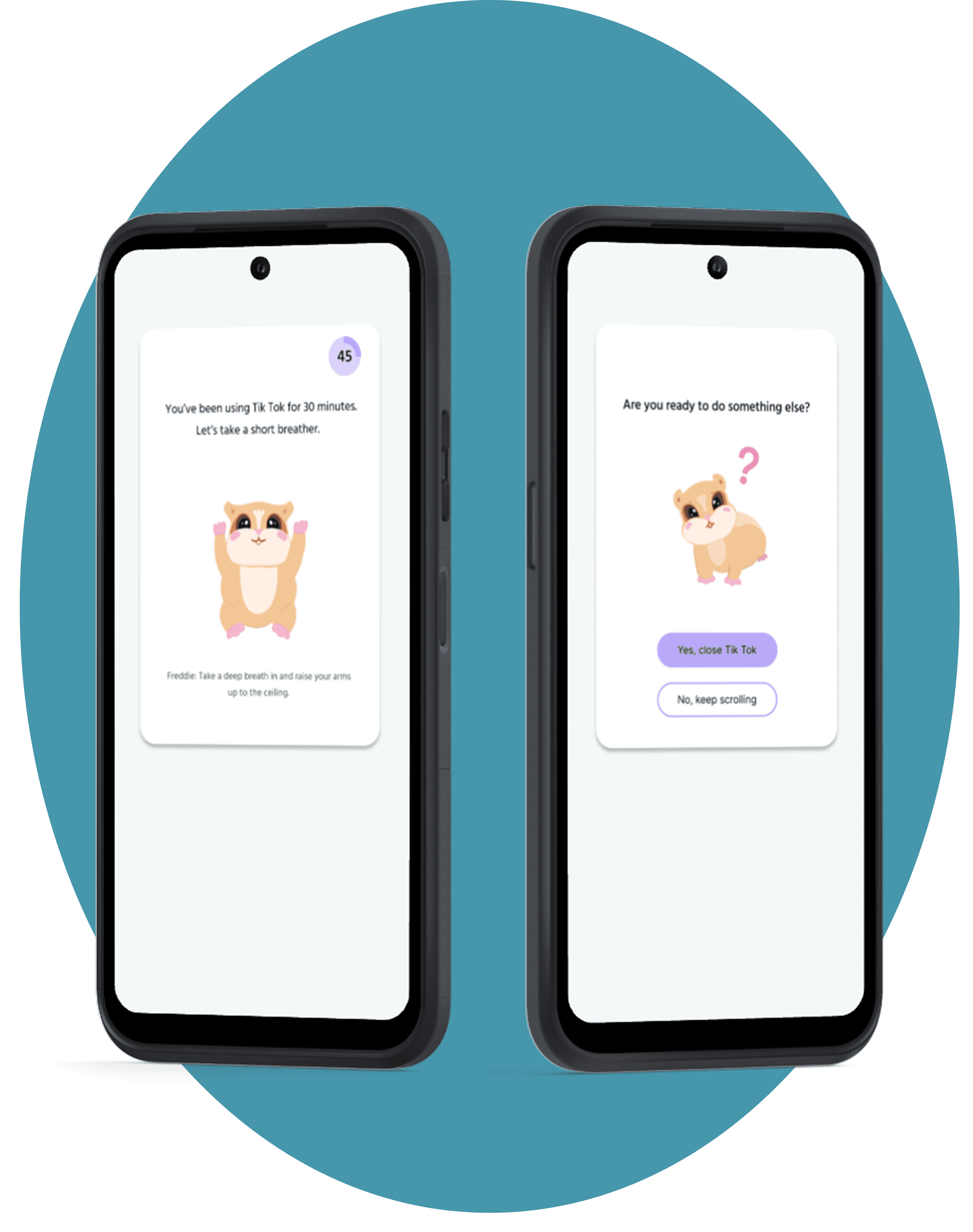
Short interruptions for stretching and deep breathing can help you to stop doom scrolling. Paired with gentle encouragement to close the app, your hamster will help you meet your screen time goals.
Short interruptions for stretching and deep breathing can help you to stop doom scrolling. Paired with gentle encouragement to close the app, your hamster will help you meet your screen time goals.
The story behind the app:
The story behind the app:
It was 2021 and I was in college. My 5 roommates and I, taking classes online and sharing a small house, were getting to know each other very well. A few months into this arrangement, we discovered we all had the same problem — we were spending more time on our phones than we wanted to. Our screen time reports made us cringe, and yet we couldn't seem to cut down. So, I did what anyone would do… I delved into a months-long project to imagine a solution.
I asked myself: why are social media platforms so entrancing? And how can I design something that empowers users to build new habits?
It was 2021 and I was in college. My 5 roommates and I, taking classes online and sharing a small house, were getting to know each other very well. A few months into this arrangement, we discovered we all had the same problem — we were spending more time on our phones than we wanted to. Our screen time reports made us cringe, and yet we couldn't seem to cut down. So, I did what anyone would do… I delved into a months-long project to imagine a solution.
I asked myself: why are social media platforms so entrancing? And how can I design something that empowers users to build new habits?
The research phase:
The research phase:

Participant Observation
I took an ethnographic approach to this research: I observed college students as they used technological devices (phones, computers and tablets) in order to identify behavioral patterns.
Participant Observation
I took an ethnographic approach to this research: I observed college students as they used technological devices (phones, computers and tablets) in order to identify behavioral patterns.

Interviews
I interviewed college students about their tech habits. I asked about how they use their devices and how they feel about various aspects of their digital life.
Interviews
I interviewed college students about their tech habits. I asked about how they use their devices and how they feel about various aspects of their digital life.

Surveys
I designed a survey to reach more participants and gain more insight into my research questions. For example, I asked questions about concerns or reservations regarding phones and social media.
Surveys
I designed a survey to reach more participants and gain more insight into my research questions. For example, I asked questions about concerns or reservations regarding phones and social media.
Literature Analysis
I read scholarly research about habit formation, behavior change, persuasive design, and addiction. This gave me insight into how social media is designed to be addictive, and how to break away from it.
Literature Analysis
I read scholarly research about habit formation, behavior change, persuasive design, and addiction. This gave me insight into how social media is designed to be addictive, and how to break away from it.
Competitive Analysis
I researched how others have already tried to solve this problem. What's worked and what hasn't? How will my solution be different?
Competitive Analysis
I researched how others have already tried to solve this problem. What's worked and what hasn't? How will my solution be different?
Affinity Diagramming
I organized my research finding into an affinity diagram. With all of the most important research findings and design concepts in one place, I could more easily visualize and connect ideas.
Affinity Diagramming
I organized my research finding into an affinity diagram. With all of the most important research findings and design concepts in one place, I could more easily visualize and connect ideas.
The design phase:
The design phase:
This was an iterative process that involved…

Wireframe Sketches
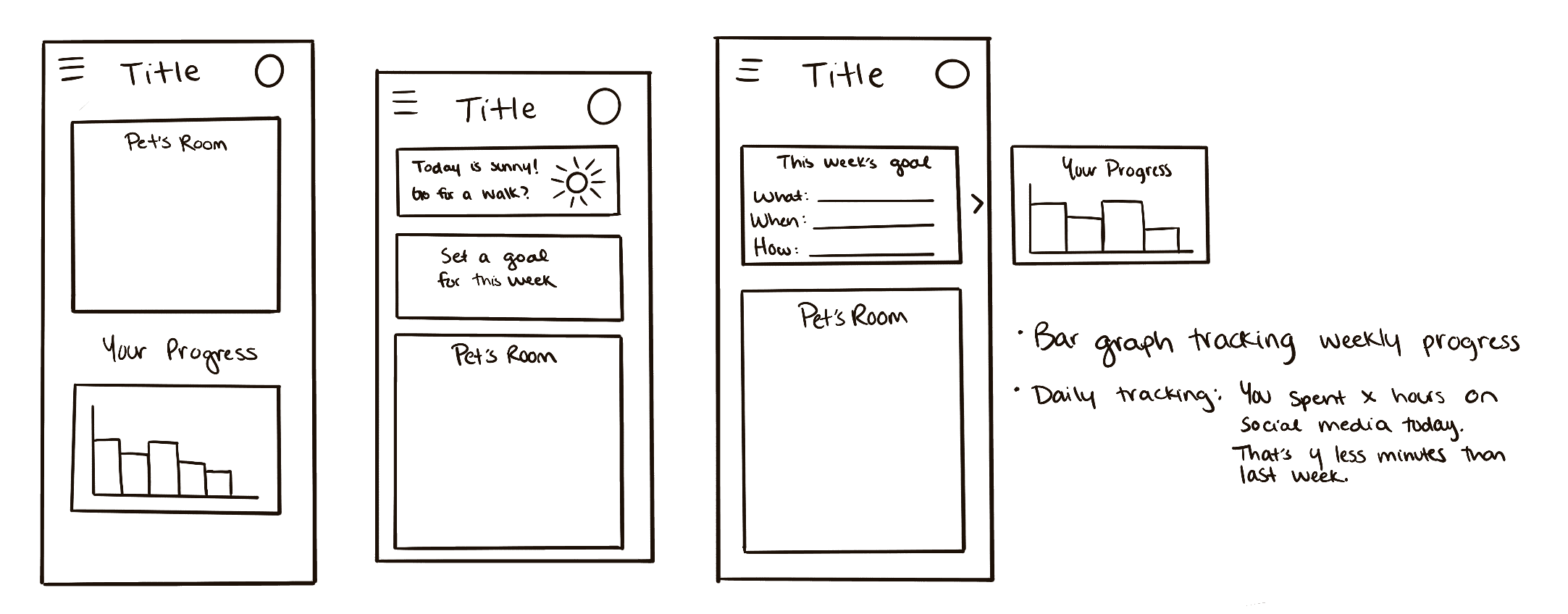
I made wireframe sketches to plan the app's features, layout, and navigation.

User Flows
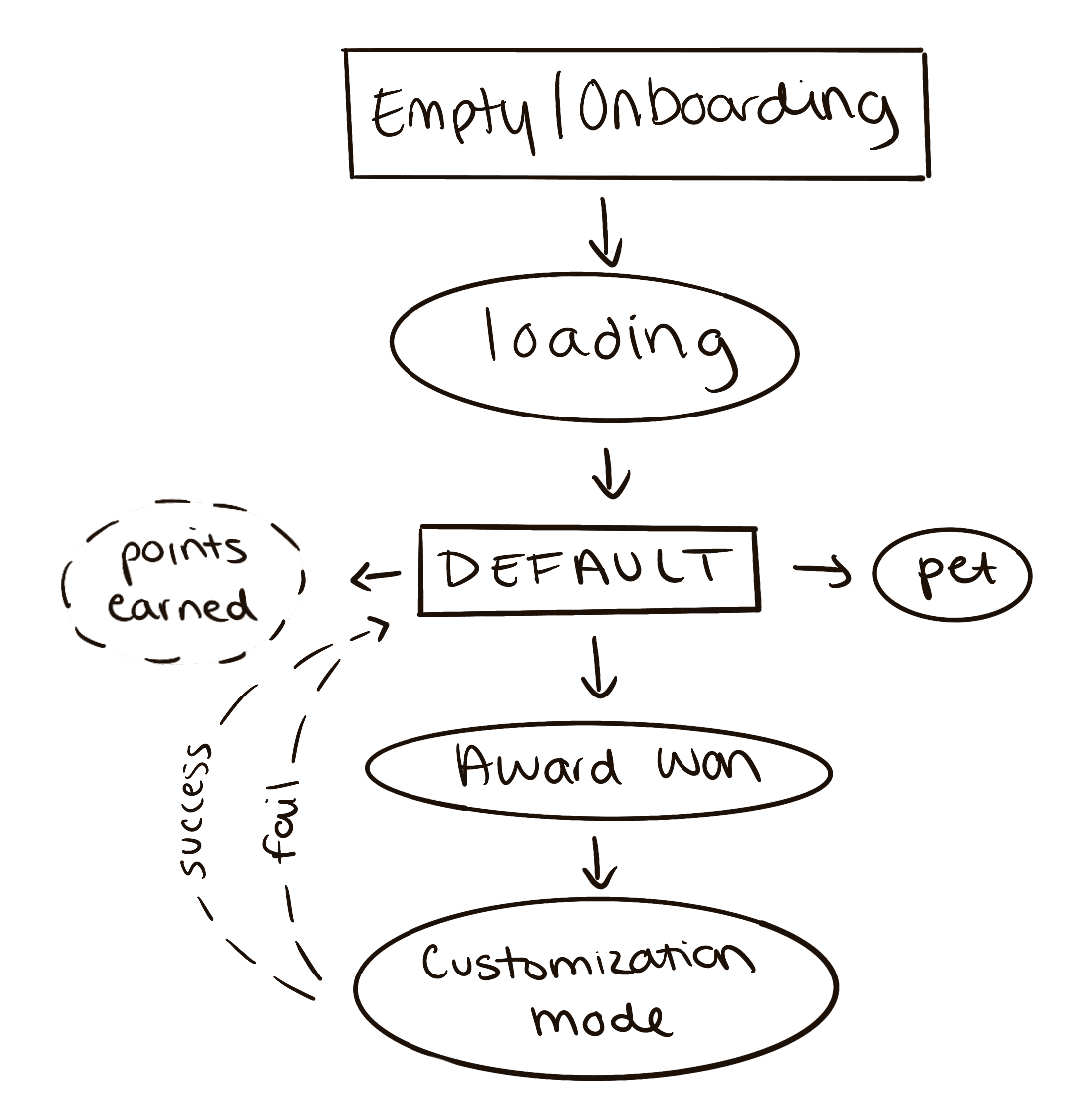
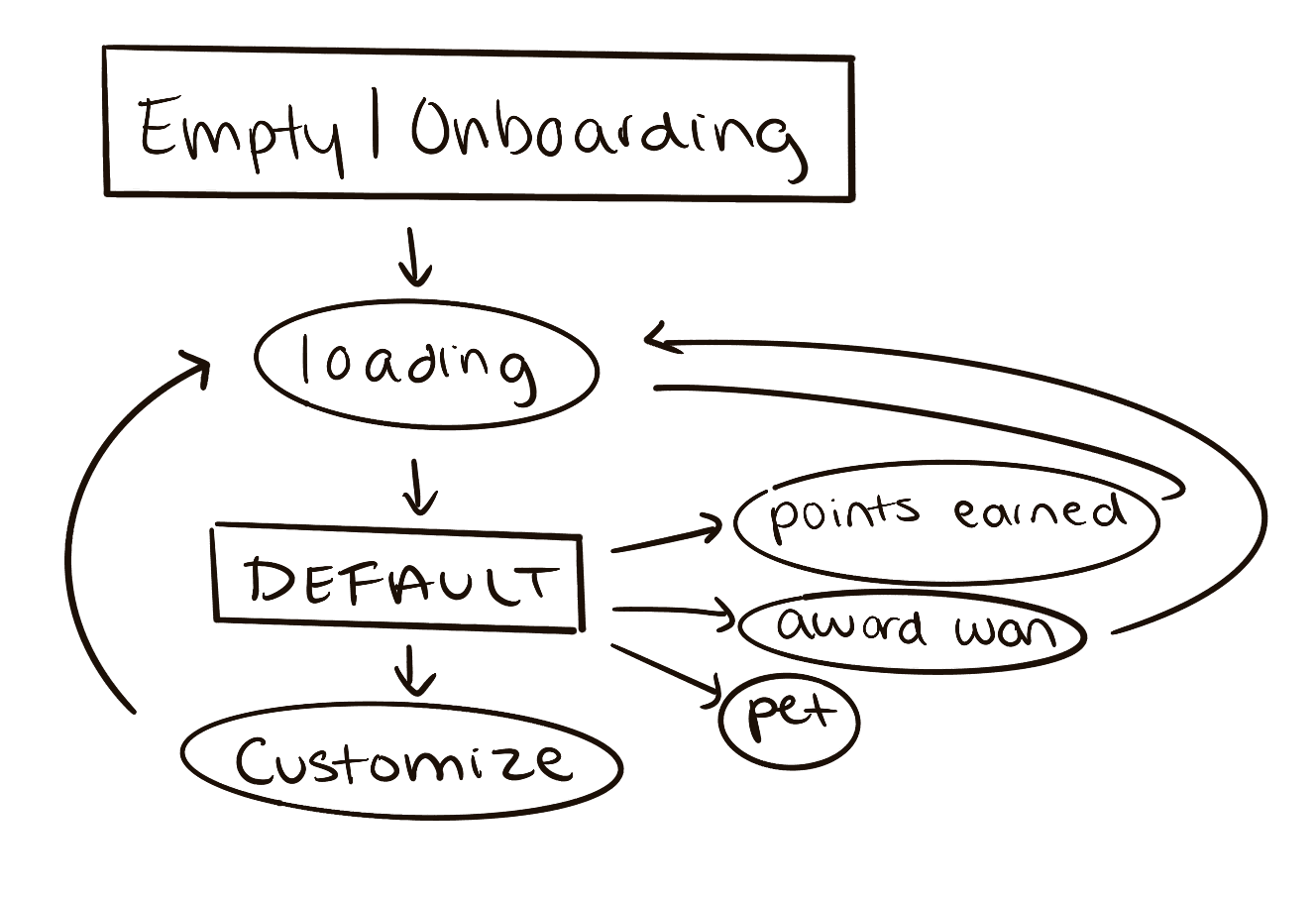
I created user flows to map out the interaction paths that users can take in the app.

Low-Fidelity Prototype
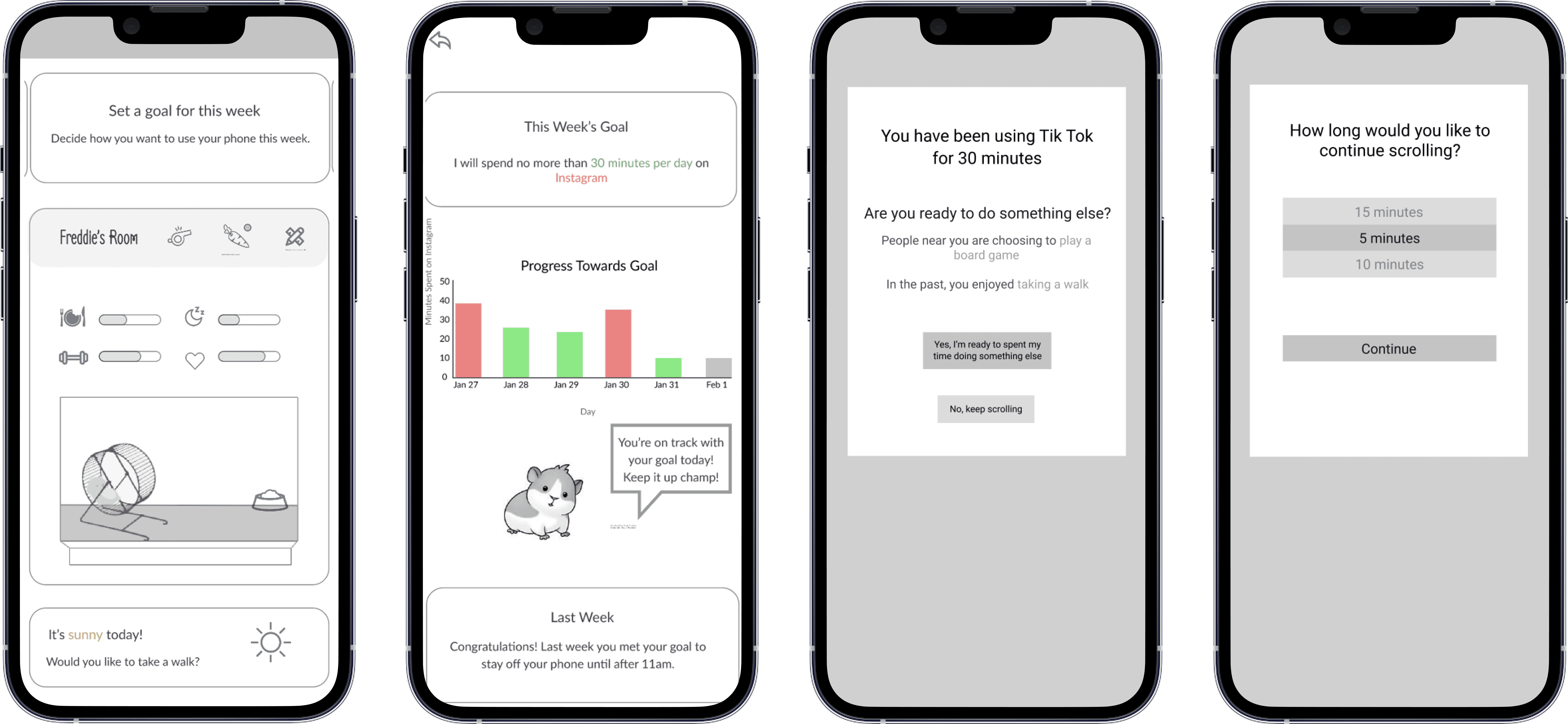
Focused on working out the app's functionality, I created a low-fidelity prototype.
Character Design
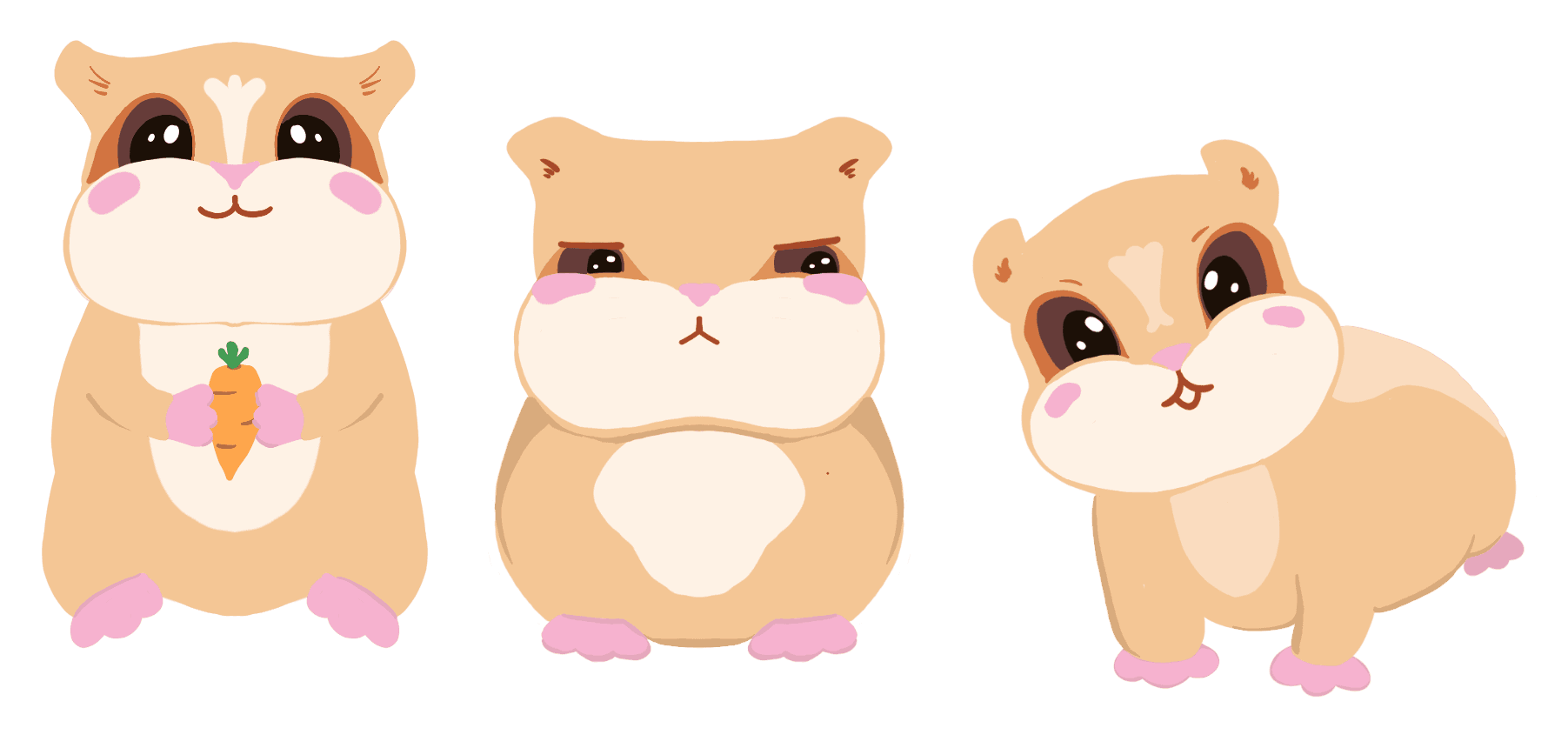
I designed hamster companions that motivate users to work towards their screen time goals.
UX Testing
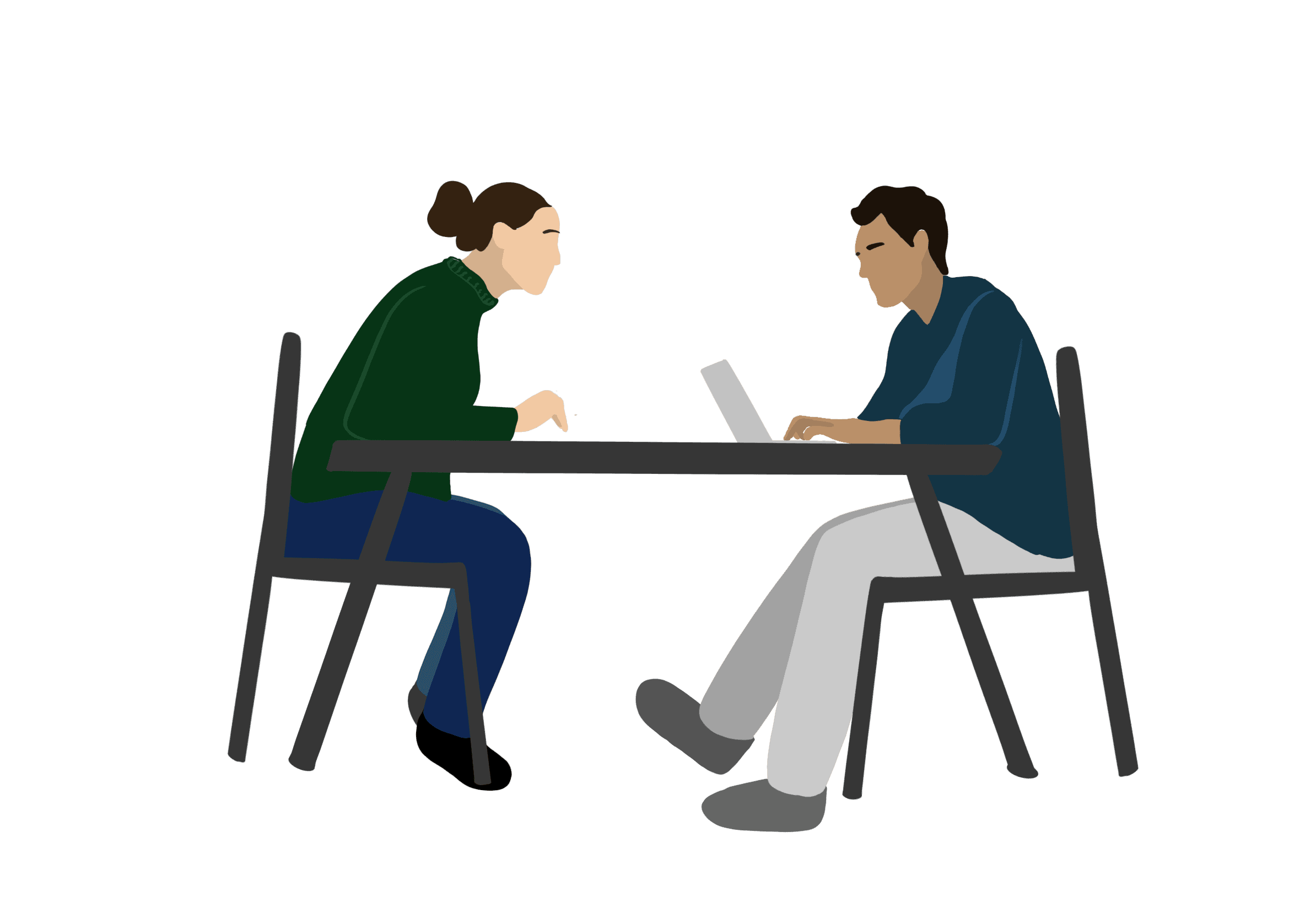
I conducted task-based usability testing with 6 participants, which was followed by a questionnaire.


Wireframe Sketches
I made wireframe sketches to plan the app's features, layout and navigation.
Wireframe Sketches
I made wireframe sketches to plan the app's features, layout and navigation.

User Flows
I created user flows to map out the interaction paths that users can take in the app.
User Flows
I created user flows to map out the interaction paths that users can take in the app.

Low-Fidelity Prototype

Focused on working out the app's functionality, I created a low-fidelity prototype.
Low-Fidelity Prototype
Focused on working out the app's functionality, I created a low-fidelity prototype.
Character Design

I designed hamster companions that motivate users to work towards their screen time goals.
Character Design
I designed hamster companions that motivate users to work towards their screen time goals.
UX Testing
I conducted task-based usability testing with 6 participants, followed by a questionnaire.
UX Testing
I conducted task-based usability testing with 6 participants, followed by a questionnaire.